Press B4 for Sausage Roll: The Unmanned Shops Winning Britain Over One Weird Button at a Time
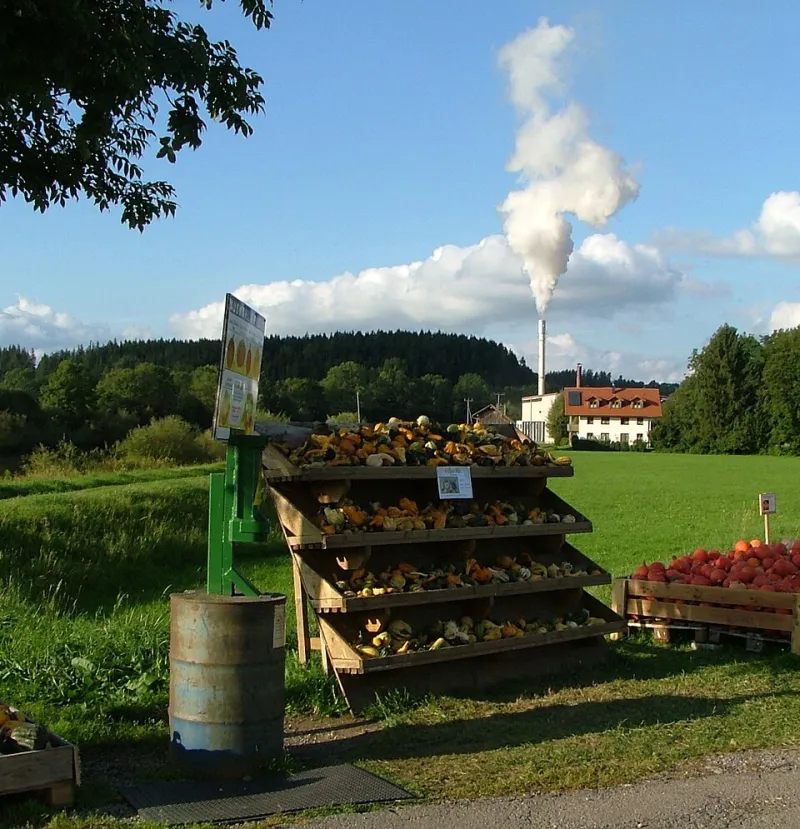
Photo: Richard Mayer, CC BY 3.0, via Wikimedia Commons
Picture the scene. It is 7.12am, you are on a B-road somewhere past a sign that says 'No Through Road', and you have a hunger that only a six-egg tray and a lukewarm can of something fizzy can solve. You pull into a gravel lay-by. There is no shop. There is no human. There is a metal cabinet with a contactless reader and a handwritten note that says 'Please shut the door properly, the wind gets in'.
Reader, it is brilliant.
The new wave is basically a shelf with a lock on it
Britain has always had vending machines, obviously. Train stations, leisure centres, the gloomy corner of a MOT centre where the only option is a Mars bar that has seen things. What is happening in 2026 is different. The machines have escaped. They are out on farm tracks, in village car parks, bolted to the side of sheds and tucked behind churches. They sell eggs. They sell worms. They sell cakes made by a woman called Jan. One of them, allegedly, sells nothing but cans of beans, which is either the most British thing ever installed or a very committed bit of performance art.
These aren't the sleek, app-connected, cashless vending units you see in airports. They're often just a fridge with a lock, a second-hand card reader and a sticker. The whole point is that they're not fancy. A proper vending machine has a spiral arm that drops your Twix from a height. A Pluka-grade vending machine is more likely to be a chest freezer in a shed with an honesty box and a laminated sign explaining that the eggs are £2.50 and the potatoes are £1.80 and please don't let the dog out.
Why we trust a metal box more than a shop assistant
There's a theory that these machines are thriving because of convenience. That's part of it. But the real draw is something stranger: they feel personal. A self-service checkout is a machine that treats you like a potential thief. A roadside egg cabinet treats you like a neighbour who will probably do the right thing. It's a tiny, low-stakes social contract, renewed every time someone taps their card and takes a box of six without a human watching.
And they're not anonymous. The best ones have a whole personality. There's a cabinet in the West Country that sells fishing bait and, for reasons nobody has ever explained, a small selection of dog chews. There's a shed in Yorkshire where the machine is stocked by a retired couple who leave a note if the Bakewell slices are running late. There's a community larder in a Scottish village that started as a way to shift surplus veg and now functions as the village's unofficial noticeboard, with a laminated sign listing who has died and who has had a baby, alongside a button for a £1 bag of carrots.
These machines are basically local news with a coin slot.
The eggs have a reputation
Ask anyone who buys eggs from a machine and they will become strangely evangelical. The eggs are fresher. The yolks are better. The chickens are happier. The whole transaction takes nine seconds. There's a genuine, measurable joy in buying eggs from a cabinet at the end of a lane, and it has absolutely nothing to do with the eggs themselves. It's about the tiny thrill of being trusted, and the even tinier thrill of a machine that isn't trying to upsell you a loyalty card.
There's also, let's be honest, a certain comedy to it. The machines break. The card readers play up. The labels are always slightly wrong. One machine near me — not naming names, the owner knows who he is — has a button labelled 'SAUSAGE ROLL' and another labelled 'MYSTERY'. The mystery is a sausage roll. Everyone knows the mystery is a sausage roll. It has become a local in-joke, which is a very British way of enjoying something.
When the machine is the whole village
In some places, the machine is the shop. Not a replacement for a shop, not a quirky addition — the actual shop. There's a cabinet in a Devon village that stocks milk, bread and, on Fridays, a limited run of pasties. There's a bait dispenser on a Welsh reservoir that is, functionally, the only retail outlet for four miles in any direction. There's a machine in a Norfolk lay-by that has become a sort of unofficial meet-up point. People stop. They buy eggs. They chat to whoever else is buying eggs. It's a vending machine that has accidentally become a village hall.
The beans machine deserves its own paragraph. Whether it's real or a beautifully sustained local myth, the story goes that someone installed a machine that sells only cans of beans, and that it is regularly restocked, and that people genuinely buy them. I choose to believe it. A country that once got misty-eyed over a supermarket's Christmas advert can absolutely sustain a beans-only vending machine. It's not a business. It's a bit.
Nominate your weird one
So here's the Pluka call to arms. We want to hear about the strangest vending machine you've ever bought from. The one that sells something it has no business selling. The one with the laminated note that has been there so long the ink has faded. The one down a lane, behind a gate, next to a bin, that you only know about because someone's cousin told you.
Tell us the location, the button you pressed and what came out. We'll compile the best into a proper field guide. In the meantime, if you're passing a shed with a contactless reader and a handwritten sign, pull over. Buy the eggs. You'll feel better.