The 7pm Vulture Shift: Britain’s Most Competitive Aisle Is Next to the Bakery
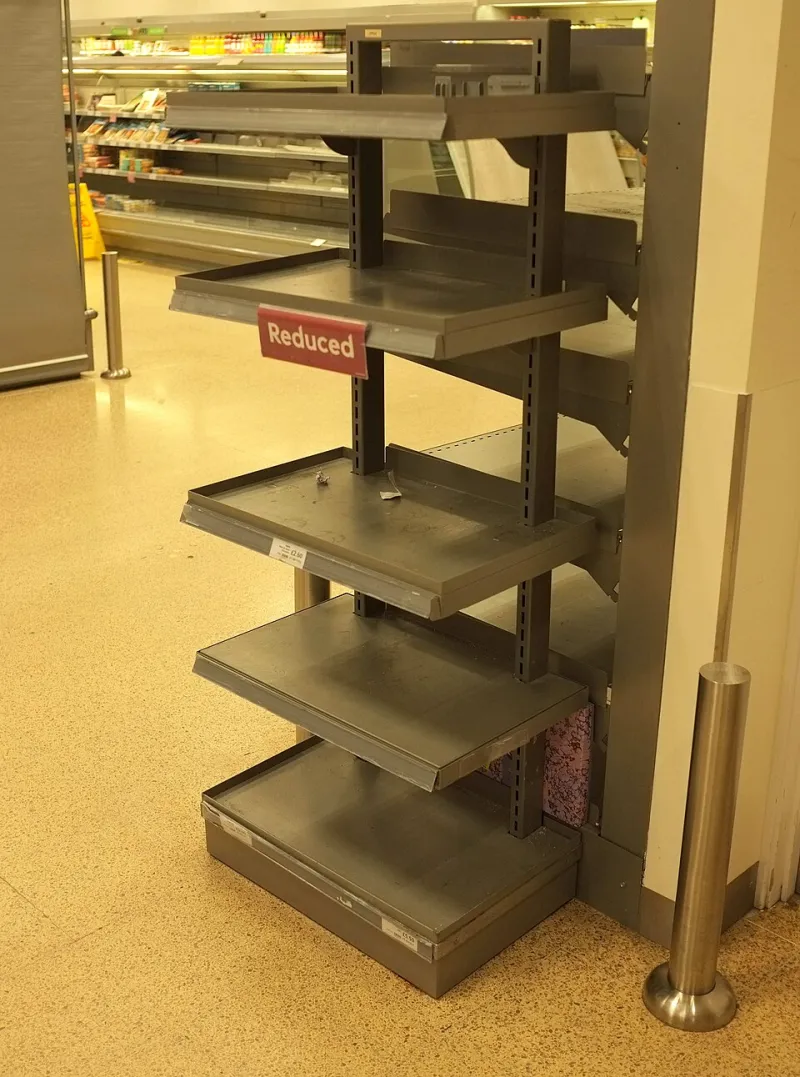
Photo: Derek Harper , CC BY-SA 2.0, via Wikimedia Commons
It is 6:52pm on a Tuesday and the supermarket has entered its strange, twitching twilight. The commuters have gone. The meal-deal crowd has cleared. And around aisle nine, a small, polite army is beginning to gather.
They are not here for a weekly shop. They are here for the yellow sticker.
You know the ones: the bright reduced labels slapped onto soon-to-be-out-of-date sandwiches, wonky bakery loaves, suspiciously large quiches and the occasional punnet of something that looks like it has already accepted its fate. In 2026, these little patches of yellow have become more than a discount. They are a hobby, a drama, a low-stakes reality show with no presenter and a cast of strangers holding baskets far too casually.
The rules of engagement
There is an unspoken etiquette to the yellow-sticker patrol, and it is surprisingly strict. You do not sprint. You do not reach over shoulders. You definitely do not make a grab for the last reduced pain au chocolat while someone’s hand is already hovering six inches above it.
The accepted move is the polite pounce: a slow, dignified drift towards the shelf, followed by a casual glance that says, “Oh, this? I was just looking.” The true professionals can spot a sticker gun from thirty metres away. They know the difference between a staff member doing a normal price check and one about to begin the sacred ritual of markdowns.
“It’s all about timing,” says Priya, a 29-year-old shopper from Leeds who describes herself, without irony, as “yellow-sticker adjacent”. “If you get there too early, you look desperate. Too late and it’s just a sad empty shelf and a man with a trolley full of reduced croissants. You have to hover with purpose.”
Hovering with purpose is the national technique. It involves standing near the bakery section while pretending to consider a full-price loaf you have no intention of buying. It is not lying. It is theatre.
A very British spectator sport
What makes the yellow sticker so compelling is that it turns an ordinary supermarket into a tiny, self-contained drama. There are characters. There are plot twists. There is the recurring villain: the shopper who asks a staff member, “Are there any more reductions coming out?” at 6:15pm, thereby breaking the first rule of Yellow Sticker Club.
You can spot the archetypes in any branch. The Patient Hoverer keeps a respectful two-metre distance from the shelf, basket tucked under one arm. The Bakery Whisperer knows exactly which member of staff is most likely to reduce the seeded bloomer. The Trolley Blocker parks diagonally across the aisle, creating a mild obstacle course. And then there is the Reduced Aisle Romantic, who will buy anything with a yellow sticker on it, even if it is a family-sized trifle and they live alone.
Staff, meanwhile, are the referees. They wield the sticker gun with calm authority while a small crowd watches as if they are about to reveal the winner of a talent show. In many ways, they are.
The rankings: most dramatic yellow-sticker finds
Every bargain hunter has a story. But some finds are simply more cinematic than others. Here is our entirely subjective, deeply unscientific ranking of the most dramatic yellow-sticker moments.
1. The 12p rotisserie chicken
Rare. Legendary. Slightly concerning. Finding a whole cooked chicken for less than the price of a carrier bag feels like a glitch in the matrix. The lucky shopper usually adopts the expression of someone who has just won a small award and does not want to make a fuss about it.
2. The 30p sushi box with “Eat Today” on it
A dare in a plastic tray. The sticker says reduced; the fish says hurry. Eating it on a bench outside is a rite of passage.
3. The half-price birthday cake with no birthday
There is something beautifully British about buying a Colin the Caterpillar or a Victoria sponge purely because it has been reduced. Nobody needs a birthday to justify cake. The sticker is the occasion.
4. The 45p family-sized quiche
A quiche that serves four for less than a bus fare. The only logical response is to eat it warm in the car park and tell nobody.
5. The 20p loaf that becomes breadcrumbs
This is the bargain hunter’s version of a long-term investment. You buy it, you freeze it, you convince yourself you are going to make homemade stuffing. You will not. But the intention is pure.
6. The 7p bag of sprouts in January
Nobody wants sprouts. That is exactly why they are 7p. Buying them feels less like a bargain and more like a public service.
Why we can’t look away
In a year when everything from a pint to a parking app seems to cost more, the yellow sticker offers a tiny, tangible win. It is not really about saving 40p. It is about the story. The text to your mum: “Got a £12 salmon for £1.20.” The quiet smugness of a lunch you assembled from three separate reductions. The shared nod with a stranger who also spotted the last reduced pizza.
It is also, frankly, better than most reality TV. There is no host, no manufactured tension and no reunion special. Just real people, a sticker gun and the eternal question of whether anyone actually needs four reduced hot cross buns at 7:05pm on a Thursday.
The answer, of course, is yes. Obviously yes.
So next time you find yourself drifting towards the bakery aisle at an odd hour, remember the rules: be polite, be patient and never sprint. The yellow sticker is not just a discount. It is a small, silly, deeply British ritual — and the aisle is always better with a bit of drama.