Bench Press: The Strange, Funny and Faintly Threatening Art of Britain’s Memorial Plaques
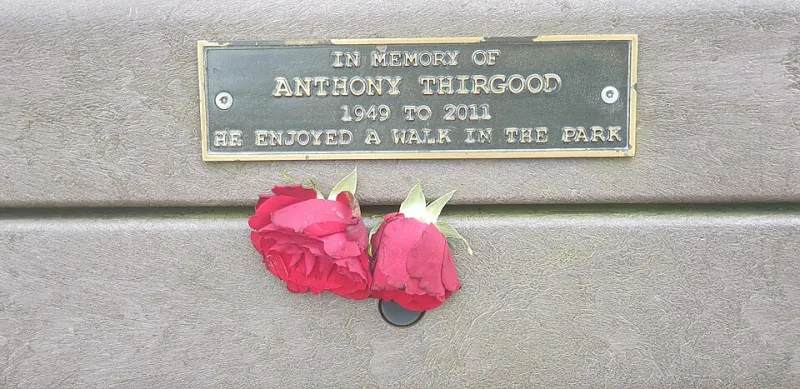
Photo: Christine Matthews , CC BY-SA 2.0, via Wikimedia Commons
There is a bench somewhere in Britain that says, in neat brass letters, 'In memory of Keith, who hated this bench.' It is a perfect sentence. It contains grief, humour, a whole personality and a mild warning. It is also, if you think about it, a tiny piece of public art.
Memorial benches are everywhere. You have walked past thousands of them. They sit on seafronts, in parks, outside supermarkets, on the edge of car parks. Most of them have a small plaque with a name and two dates. Some of them have a line that stops you in your tracks. In 2026, the internet has started to notice. Photos of odd memorial plaques are doing the rounds. People are collecting them like Pokémon, except the Pokémon are dead and the cards are attached to benches.
The bench as a stage
A memorial bench is a strange thing. It is furniture, but it is also a monument. It is designed to be sat on, which means it is designed to be ignored in a specific way. You do not stand in front of it and contemplate mortality. You put your shopping down and check your phone. The plaque is there, quietly, waiting for someone to read it.
And when you do read it, it can be extraordinary. There are plaques that are heartbreakingly simple: 'For Joan. She loved this view.' There are plaques that are clearly a joke between friends: 'In memory of Dave. He never paid for a round.' There are plaques that are faintly threatening: 'Please do not feed the pigeons. Nan is watching.' There are plaques that raise more questions than they answer: 'For Peter. The bench knows what he did.'
The inscriptions that stop you in your tracks
On a seafront in Sussex, there is a plaque that reads: 'In memory of Margaret, who sat here every day and judged the dog walkers.' On a hill in Yorkshire, one says: 'For Arthur. He walked up this hill every Sunday and complained about it every time.' In a park in Cardiff, a bench bears the words: 'For our dad. He would have hated the flowers.'
These are not just jokes. They are portraits. A well-written plaque tells you more about a person than a whole obituary. It tells you what they liked, what they hated, what they were like to sit next to. It tells you that they were real. It also, subtly, tells you that the person who wrote the plaque knew them very well.
Local legends and the Keith problem
The Keith bench has become a minor legend. Nobody seems to know exactly where it is — or rather, several benches claim to be the Keith bench. There is a version in a pub garden in Norfolk. There is a version on a promenade in Dorset. There is a version that is probably just a bloke called Keith who made it up for a laugh. The internet loves a mystery, and the Keith bench is a good one.
The truth is that most memorial benches are chosen by families who want something simple. They are not trying to be funny. They are trying to be accurate. If a person was funny, the plaque is funny. If a person was grumpy, the plaque is grumpy. The comedy is not imposed. It is inherited.
A quiet form of public art
We do not usually think of benches as art. They are too useful for that. But a bench with the right words on it is a collaboration between a family, a council, a foundry and a passer-by. It is a small, civic gesture. It says: this person existed, they sat here, they mattered. And it says it in a way that is available to anyone who happens to need a sit down.
In 2026, when so much public space feels designed by committee, the memorial bench is a reminder that the best bits are often the most personal. A plaque does not need planning permission to be moving. It just needs a good sentence. 'In memory of Keith, who hated this bench' is a good sentence. It is also, in its way, a masterpiece.