The Courgette Has Gone Rogue: A Field Guide to Village Hall Judging Season
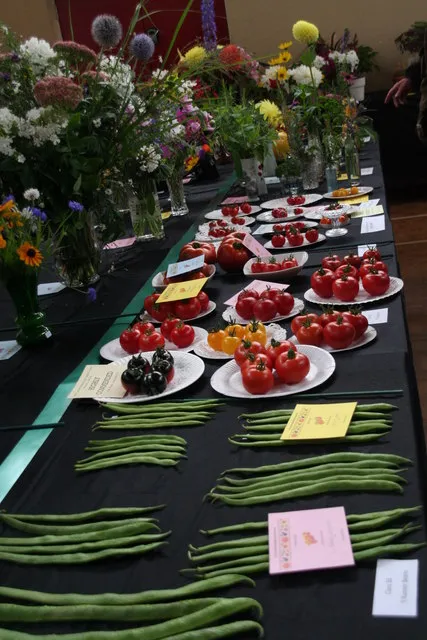
Photo: Chris , CC BY-SA 2.0, via Wikimedia Commons
There is a particular smell to a village hall in October. It is tea urn, floor polish and the faintly threatening scent of a hundred perfectly decent vegetables being judged. By 9.15am the trestle tables are covered in greaseproof paper, the schedule is open at class 47, and a man called Keith is explaining, with great patience, that a marrow is not a large courgette. It is, in fact, a marrow. This distinction will matter later.
Welcome to the village produce show: Britain’s most ferociously polite competitive sport. It is part horticulture, part baking, part amateur dramatics, and part local history with a scorecard. The prizes are modest. The bragging rights are not.
The schedule is the script
Every show has a schedule, and every schedule is a tiny constitution. It lists the classes, the rules, the entry fees and the exact wording that will be quoted back at someone in a WhatsApp group three days later. There are classes for onions, dahlias, chutney, photography, handwriting and something called ‘an arrangement of autumn foliage’. Then there is the glorious catch-all: ‘any other vegetable’.
‘Any other vegetable’ is where hope goes to be gently assessed. It is a class that can contain a single perfect beetroot, a suspiciously shiny pepper, a punnet of something nobody can identify, and a runner bean so long it has to be laid diagonally. Judges are looking for condition, uniformity, presentation and whether the exhibitor has read the schedule properly. A cucumber may be too bendy for one class and not bendy enough for another. This is not cruelty. It is simply the rules.
The language is beautifully old-fashioned. People are not contestants; they are exhibitors. They do not win first place; they take first in class. The judge’s comments are written in biro on small cards and can be devastating in a very understated way. ‘Good colour, uneven size.’ ‘Pleasing flavour, slightly dry.’ ‘Would have benefitted from a final wipe.’ You can feel the exhale from across the room.
A gentle sport with sharp elbows
On paper, the produce show is a model of civic calm. In practice, it is a soap opera with jam. The rivalries are rarely loud. They are expressed through a raised eyebrow near the Victoria sponge table, or a carefully neutral ‘Oh, is that Sandra’s entry?’ The stakes are low and enormous at the same time.
Best in Show is the big one. It is not just a rosette; it is a verdict on your year. The winner might be a giant leek, a jar of marmalade, a photograph of a duck or a child’s drawing of a cat that looks nothing like a cat but has real confidence. The judging room goes quiet when the rosette is placed. Someone’s nan pretends not to care. Someone’s neighbour takes a photo for the family group chat. The vicar says something diplomatic about the high standard of entry.
And then there is the fallout. Not fistfights — this is a church hall, not a football ground — but the slow, simmering aftermath. A neighbour’s jam takes Best in Show and suddenly the WhatsApp group has opinions about ‘consistency’ and ‘set’. A scone is marked down for ‘uneven fruit distribution’ and someone wants to know which judge wrote that, exactly. The reply is always some version of: ‘The judge’s decision is final.’ It is the most passive-aggressive sentence in the English language.
The WhatsApp aftermath
The results do not stay in the hall. They go home in pockets, on phones and into group chats with names like ‘Village Notices’ and ‘Allotment Crew’. First come the congratulations, usually with too many exclamation marks. Then come the photographs: rosette on a kitchen worktop, giant onion next to a kettle for scale, a child holding a certificate for ‘most creative creature made from a vegetable’.
Then, quietly, comes the query. ‘Just wondering about class 12 — was the winner supposed to be round or long?’ Nobody names names. Everybody knows exactly which plot, which kitchen, which neighbour. The produce show does not create grudges so much as give existing ones a seasonal outlet. It is cheaper than therapy and considerably better catered.
What makes it work is that the stakes are genuinely tiny. No one is getting rich from a first in class for three runner beans. But the show is about being seen. It is about putting something you made on a table and letting other people look at it. In a world of algorithmic feeds and endless scrolling, that is oddly powerful. A handwritten scorecard is not a like. It is a judgement, and it is real.
Why 2026 still cares
The village produce show should feel like a relic. Instead, it feels weirdly current. In 2026, local life is a mix of digital noticeboards and face-to-face rituals, and the produce show sits right in the middle. Entry fees are usually small. The hall is usually cold. The tea is usually strong. But the show gives people a reason to make something, show up and talk to someone they might otherwise only wave at from the car.
There is also a quiet cost-of-living logic to it. Growing a few courgettes, baking a loaf or making a jar of chutney is cheap. Entering it is cheaper. Winning a rosette costs nothing at all and yet can keep someone cheerful until Christmas. Younger exhibitors are turning up too, often with novelty categories, slightly chaotic photography and a genuine love of the absurd. The produce show has discovered the internet’s favourite thing: low-stakes competition with high emotional payoff.
How to survive your first show
Read the schedule. Then read it again. Bring your own plate if it says bring your own plate. Do not polish a potato unless the schedule specifically asks you to polish a potato. Do not touch another exhibitor’s exhibit, even if it is leaning dangerously and you are only trying to help. And do not, under any circumstances, ask the judge if they are sure.
Most importantly, enjoy the theatre of it. The produce show is not really about the perfect carrot. It is about the moment the hall fills up, the scorecards are handed out and a small corner of Britain becomes the centre of the universe for an afternoon. The courgette has gone rogue. The leek has a temper. The tea urn is still going. And somewhere, a WhatsApp group is about to get very polite indeed.