Dial D for Disco: Britain’s Red Kiosks Are Getting Weird Second Jobs
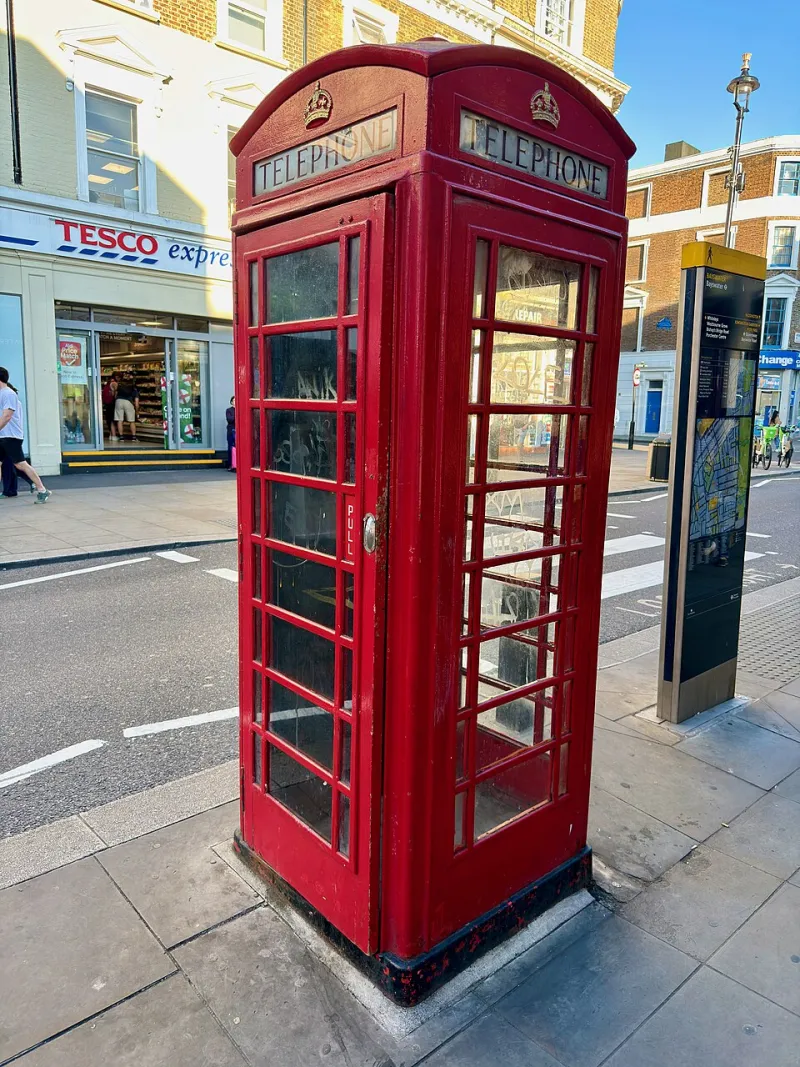
Photo: Oleg Yunakov, CC BY-SA 4.0, via Wikimedia Commons
The red telephone box is no longer a phone. It is a tiny building with a past, a fresh coat of paint and, increasingly, a job it was never designed to do. Since BT began letting communities adopt redundant kiosks for £1, Britain has quietly turned hundreds of them into miniature libraries, defibrillator points, coffee hatches, art galleries, seed swaps and, in one field somewhere, a disco. The kiosk has become the ultimate British fixer-upper: too small for anything serious, too beloved to scrap, and just weird enough to work.
The Rules of the Kiosk Second Act
There are a few rules. The conversion must be slightly improbable. The paint must be red, or a red-adjacent colour that a volunteer will defend in a parish meeting. There must be a laminated sign explaining opening hours that are more of a rumour than a schedule. And someone, somewhere, must have said: ‘Wouldn’t it be nice if…’ That sentence is the engine of British civic life.
I spoke to volunteers at half a dozen adopted kiosks. Not one described the project as a ‘brand activation’ or a ‘placemaking intervention’. They said things like ‘it started as a joke’ and ‘we had a spare shelf’ and ‘the council said no, so we did it anyway’. This is how the country works.
8. The Very Small Art Gallery
A kiosk in a coastal town now shows one painting at a time. The paintings are by local artists, which means the standard is high and the hanging is done with fishing wire. The volunteer, who asks to be called Jan, says the gallery has ‘a strict one-in, one-out policy’ because ‘you can’t fit a private view in there, let alone a gift shop’. Visitors peer through the glass like they are visiting a very shy celebrity. It is brilliant.
7. The Coffee Hatch
Somewhere in the Home Counties, a kiosk has become a coffee hatch. You order through the door, wait on the pavement, and receive a flat white from a hatch that was designed for a telephone handset. The queue is four people long and the milk is oat. It should be absurd. Instead it feels like the most natural thing in the world. The volunteer barista says the kiosk is ‘the smallest café in the county, probably’, and that the only real problem is that the door opens inwards. ‘You learn to breathe in,’ she says.
6. The Book Exchange
The book kiosk is the most common conversion, and the most revealing. Inside: crime thrillers, a diet book from 2004, three copies of a celebrity memoir, and a sticker that says ‘please leave a book, not a bag of rubbish’. The stock is curated by nobody and everyone. One volunteer in mid-Wales, Eleri, says the kiosk has become ‘a very slow conversation’. People leave books with notes inside. Someone recently left a recipe for bara brith tucked into a paperback. ‘That’s the whole thing,’ she says. ‘It’s a phone box that now passes messages.’
5. The Seed Library
A kiosk in a village has been turned into a seed swap. You take courgette seeds, you leave runner bean seeds, you pretend you will label them. The volunteer, Rob, says the scheme is ‘95 per cent goodwill and 5 per cent unlabelled mystery beans’. There is a laminated guide to planting times and a small drawer of pencils on string. It is the only library in Britain where you can borrow something and then eat it. The kiosk has become a tiny agricultural exchange with a door.
4. The Defibrillator Station
This is the conversion that makes you stop joking for a second. A red kiosk with a green box inside: a defibrillator, a code given by the ambulance service, a light that works. In a village with no shop and a 12-minute wait for an ambulance, it is not quirky. It is essential. The volunteer who maintains it, who asks not to be named, says the kiosk is checked weekly. ‘It’s the most important thing in the village,’ he says. ‘And it’s still a phone box. People know where it is.’ That is the point. The kiosk is a landmark first, a building second.
3. The Museum of Very Local Things
One kiosk has become a museum. Not a museum of phone boxes, though that would be fine. A museum of the village: a milk bottle, a bus timetable from 1987, a photo of a flood, a piece of the old pier, a badge from a carnival. The exhibits are changed every few months. The volunteer, Carol, says the museum has ‘no budget and no insurance, but quite a lot of enthusiasm’. School groups visit. Adults stand outside and point at people they recognise. The kiosk has become a memory box with a door.
2. The Kiosk That Became a Stage
In a town with a lively open-mic scene, a kiosk now hosts ‘one-person, one-song’ gigs. The performer stands inside. The audience stands outside. The acoustics are terrible, the set is three minutes long, and the applause is muffled by glass. It is, by all accounts, the hottest ticket in town. The organiser says the kiosk is ‘the only venue in Britain where the green room is the pavement’. The neighbours have complained once. The council has done nothing. The show continues.
1. The Field Disco
And then there is the disco. A kiosk in a field, fitted with a small speaker, a mirror ball and a light that runs off a car battery. It is not a club. It is not licensed. It is, depending on who you ask, an art installation, a birthday surprise or ‘just something we did’. The volunteer who looks after it, who asks to be called Maz, says the disco is ‘open when it’s open’. People walk to it at dusk, press a button, and get three minutes of music in a field. ‘It’s not about dancing,’ Maz says. ‘It’s about the fact that someone bothered.’
Why We Can’t Let a Kiosk Retire
The phone box is a design classic, but that is not why people adopt them. It is because a kiosk is a small, stubborn promise that a place is still a place. It has a door, a roof and a bit of civic dignity. You can put a defibrillator in it, or a book, or a disco ball. You cannot put a supermarket in it. That is the appeal. It is the smallest possible unit of ‘we did something’.
So the next time you see a red kiosk with a laminated sign and a queue of two, do not mourn the telephone. It has a new job. It is probably better at this one. And if you hear a faint thump of bass coming from a field, do not worry. That is just Britain, giving a redundant building a second act.