A Plough Called Sue: Britain’s 2026 Gritter-Naming Season Is Now a Full-Blown Soap Opera
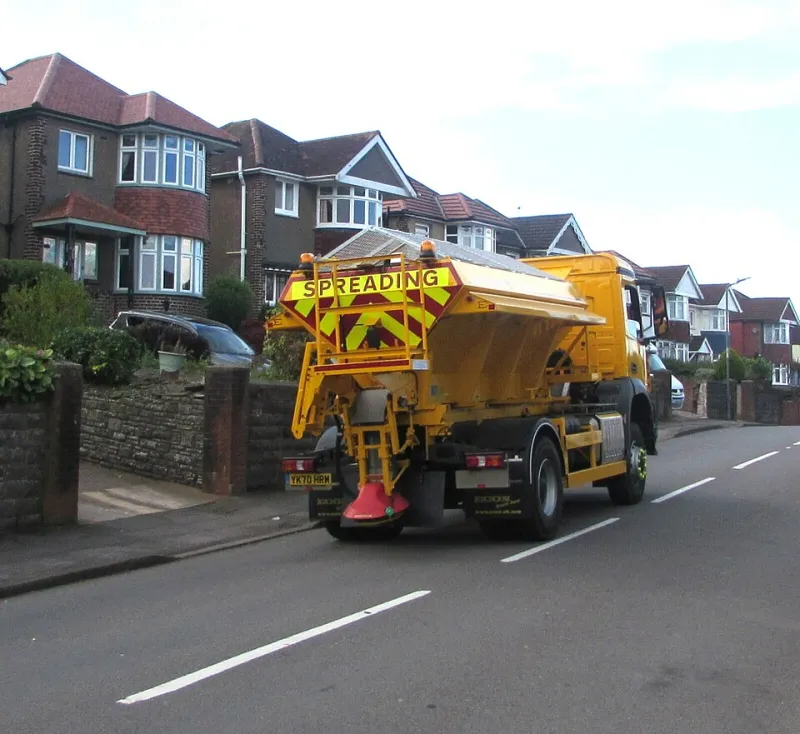
Photo: Jaggery , CC BY-SA 2.0, via Wikimedia Commons
There is a moment, usually in late October, when a council social media account posts a cheerful graphic asking the public to name a gritter. Within hours, the replies have descended into something between a poetry slam, a local election and a school playground argument. By the time the votes are counted, a snowplough from Doncaster is trending and someone in Aberdeenshire is accusing a neighbouring village of ballot-stuffing. It is, genuinely, one of Britain’s most reliable winter traditions.
The year the puns got out of hand
For 2026, the entries have been typically unhinged. Alongside returning favourites like David Plowie — still the benchmark for gritter wordplay — councils have welcomed a fresh batch of vehicles with names that suggest the public has been waiting all year to unleash them. North Yorkshire reportedly went with Salt Burn, a name that works on at least three levels and will confuse exactly the right people. A council in the Midlands is said to have approved Gritney Spears after a late surge, while a Scottish authority has gone for Snowbie Wan Kenobi, proving that the Force is still strong in local government fleet management.
Then there are the entries that did not make it. Every year, the shortlists include at least one name that was clearly submitted at 2am by someone who thought they were funnier than they are. This year’s rejected pile apparently featured Ploughy McPloughface (too obvious), Gritter Thunberg (too political for a vehicle that spreads salt), and Sir Grits-a-Lot (too early-2000s). One council reportedly received a nomination for simply “Susan”, which is either a deeply reassuring name for a snowplough or a warning about what happens when the public is allowed to vote on anything.
The small-town rivalries behind the salt
What makes the gritter-naming ceremony more than a bit of fun is the way it taps into something older and stranger: civic pride. A named gritter is no longer just a vehicle. It is a mascot, a local celebrity and, in some cases, a diplomatic incident. This year, a town in Lancashire accused a neighbouring town of coordinating votes for its own entry, which allegedly won by a suspiciously round margin. The winning name? Gritter Done. The losing town has not commented, but its local paper ran the headline “Salt and Battery” above the story, which feels like a win of its own.
Elsewhere, a primary school campaigned for a gritter to be called Sprinkle, complete with handmade posters and a chant that reportedly echoed through the playground for three weeks. It won. The council has since confirmed that Sprinkle will be deployed on the A-road bypass, which is either a lovely community story or a sign that the school run is about to get very confusing.
Why we cannot resist a silly name on a big yellow lorry
Part of the appeal is the sheer incongruity. Gritters are practical, heavy and slightly intimidating. A gritter called Sue is funny because Sue sounds like someone who would bring a flask to a fete, not a vehicle designed to keep a dual carriageway open in minus six. The humour is gentle, daft and deeply British: puns are encouraged, sincerity is allowed but must be undercut, and anyone who takes it too seriously is immediately suspected of being a council communications officer in disguise.
There is also a quiet usefulness to the whole thing. A named gritter is easier to remember than a fleet number, and councils have found that the public actually pays attention to gritting routes when the vehicle has a personality. During a cold snap, updates about “David Plowie is out on the ring road” get shared far more widely than a dry notice about winter maintenance. It is local government communication dressed up as a joke, and it works.
The 2026 result nobody predicted
Perhaps the most 2026 outcome of all is that one council, after a particularly chaotic public vote, has reportedly ended up with a gritter named after a local chip shop. The name has not been officially confirmed, but the chip shop in question has already put up a banner. The council has described the situation as “a bit of fun that got slightly out of hand”, which is basically the official motto of the entire tradition.
So as the first cold snap approaches, keep an eye out. That yellow lorry trundling past at 5am might have a name like Gritney, Sue or Salt Burn. It might be the subject of a minor feud between two villages. But it is also, undeniably, a small piece of local democracy with a flashing amber light on top. And in Britain, we would not have it any other way.