Petunias, Pettiness and a Roundabout: Britain’s Hanging-Basket Rivalries Are in Full Bloom
Photo: LilacRoses, CC BY-SA 4.0, via Wikimedia Commons
There is a particular kind of British drama that does not involve a football pitch, a soap opera or a politician saying “let me be clear.” It involves a bracket, a bag of compost and a retired postmaster named Elaine who has Opinions about trailing ivy.
Welcome to the 2026 hanging-basket season: the friendliest civic competition in the country, and also a quiet blood sport played out across high streets, pub fronts and roundabouts from Cornwall to Cumbria. On the surface, it is about flowers. Underneath, it is about reputation, colour theory, council budgets and whether Number 14 has the nerve to go purple again.
The entry form is innocent. The stakes are not.
Most towns run their basket competitions through the parish council, a local in Bloom committee or a Facebook group with 214 members and a strict no-screenshots rule. You fill in a form. You agree to be judged. You think it will be nice.
Then you see the marking criteria. In one Kentish village this summer, judges awarded points for “seasonal cohesion,” “absence of visible deadheading,” and — genuinely — “kerbside charisma.” Another contest in West Yorkshire has a category called Best Use of Petunia in a Supporting Role. It is not a joke. People prepare for it.
The result is a calendar of low-stakes scandal. In March, a Shropshire town hall was accused of “planting for the tourists” after swapping traditional geraniums for a more Instagram-friendly trailing verbena. In May, a pub in Whitstable was disqualified from its local heat for a basket that was, on inspection, 40 per cent plastic. The landlord called it “architectural,” which is one word for it.
Colour coordination is a contact sport
If you want to start a forty-minute conversation with a stranger in Britain, ask them about hanging-basket colour schemes. Then stand back.
There are the traditionalists: red geraniums, white lobelia, a bit of blue. Safe. Patriotic. Slightly municipal. There are the maximalists: hot pink, orange, a trailing something that looks like it escaped from a garden centre and is now making a break for the ring road. And then there are the people who have matched their baskets to the bunting, the shopfront, the village sign and, in one case in Norfolk, the colour of the local taxi firm.
“It’s not about flowers,” says one competition organiser in Cheshire, who asked not to be named because she has to judge the final in September. “It’s about whether you have understood the brief. If the brief is ‘summer warmth,’ and you have gone for a stark white-and-silver display, you have not understood the brief. You have made a statement. We are not here for statements.”
The midnight watering schedule
Every hanging-basket competitor has a secret. Some have two. The most common is watering.
Hanging baskets dry out fast. They need water daily in hot weather, sometimes twice. They need deadheading. They need feeding. They need, essentially, the level of commitment usually reserved for a small dog or a difficult houseplant. And because many baskets hang outside shops, pubs and council offices, the watering often happens at odd hours.
In 2026, this has spawned a fringe culture of nocturnal gardeners. There are WhatsApp groups dedicated to who is watering what and when. There are accusations of “water theft” from communal taps. There is a woman in Gloucestershire who has been photographed at 11.47pm with a two-litre bottle and a headtorch, looking like she is about to defuse a bomb rather than hydrate a fuchsia.
“I don’t do it for the competition,” she told a local reporter earlier this year. “I do it because the baskets are alive and I am not a monster.”
Begonias: the Marmite of the municipal planter
No flower divides the hanging-basket community like the begonia. Some judges love them for their reliability and their slightly waxy, old-fashioned charm. Others find them fussy, top-heavy and prone to sulking. A single begonia in the wrong basket can lose you points in one town and win you the whole thing in another.
This year, a Bedfordshire town introduced a “No Begonia” rule after what officials described as “a dispute.” Nobody will elaborate on the dispute. The dispute has clearly been going on for years.
Meanwhile, in a Suffolk village, a begonia-led display has become the subject of a weekly newsletter, a small fan club and at least one poem. The poem is about resilience. The begonia is doing fine.
The roundabout problem
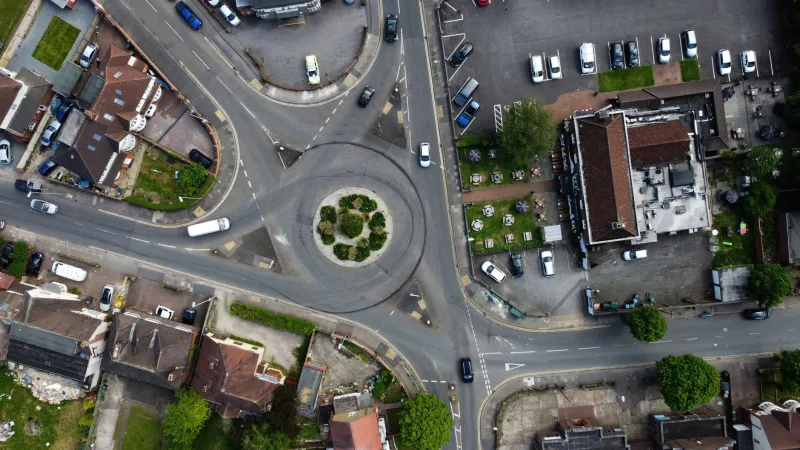
Every good hanging-basket competition eventually collides with a roundabout. Roundabouts are the cathedrals of British civic gardening: visible to thousands, impossible to maintain without closing a lane, and always slightly too ambitious.
In 2026, the roundabout display in one Staffordshire town has become a local landmark after the council installed a floral arrangement that looks, from certain angles, like a small horse. It is not meant to be a horse. It is meant to be “a celebration of local industry.” The horse interpretation has stuck. People now decorate it at Christmas.
The roundabout is also where the pettiest feuds play out. Who gets the contract? Whose design is chosen? Why is the colour scheme suddenly different from the high street? And who — who — decided to put a giant ornamental cabbage in the middle of a display that was supposed to be “pastels”?
Why we still care in 2026
Hanging baskets are not big news. They are not supposed to be. That is exactly why they work. In a year of algorithm-driven chaos and endless national arguments, a basket competition is a small, manageable arena for rivalry, community and the kind of low-stakes obsession that makes Britain bearable.
It is also genuinely nice. The baskets make high streets look better. They give neighbours something to talk about that is not parking. They produce, every summer, a tiny crop of local legends: the woman with the midnight watering can, the pub landlord with the plastic lobelia, the parish council that dared to go verbena.
So if you see a hanging basket this week, look closer. Somewhere near it, there is a judge with a clipboard, a competitor with a grudge and a begonia that has absolutely no idea of the drama it is causing.
That is the British summer. Long may it bloom, water and quietly argue.