The Ghost Sign Aisle: Britain’s Camera Rolls Are Quietly Becoming a Museum of Dead Brands
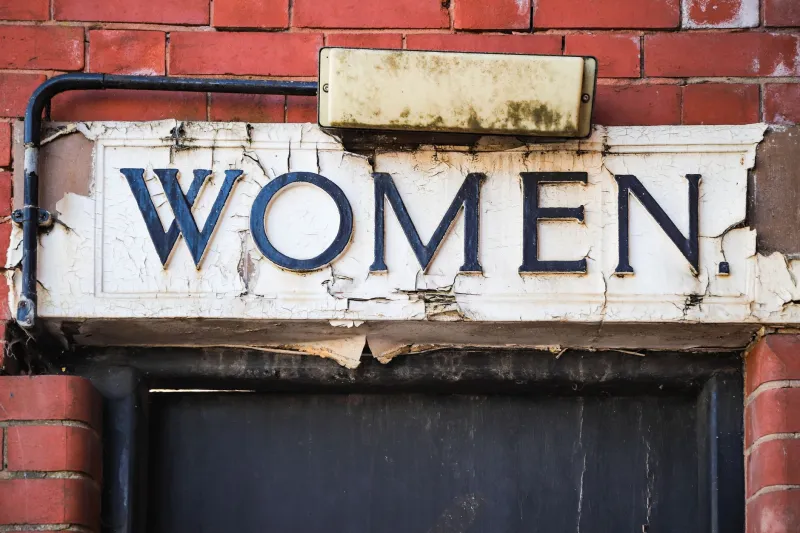
You know the photo. It’s in your camera roll, wedged between a screenshot of a QR code you’ll never use again and a picture of a bin with a funny sticker on it. It shows a shopfront. Not a nice shopfront. A dead one. The sign is faded, the shutters are down, and there’s a pigeon giving it the side-eye. You took it because something about it felt strangely important. And now, in 2026, you’re not alone.
Across Britain, people are hoarding images of vanished brands. Not deliberately, not as part of some neat archival project, but accidentally — the way you accumulate takeaway menus and odd socks. A photo of a Woolworths sign in a retail park. A packet of crisps from a flavour that disappeared in 2011. A chippy in Cleethorpes with a hand-painted cod and a phone number that no longer rings. They sit in our phones like digital scraps, and when we post them online, they get shared faster than a video of a dog stealing a sausage roll.
The accidental archive: how a shutter became social currency
The camera roll is a weird place. It’s part personal diary, part bin fire, part museum. Most of it is rubbish — blurry receipts, accidental selfies, proof that you parked legally. But tucked in among the chaos is a genuine folk archive of British high street decline, snack history and regional signage. And in 2026, sharing that archive has become a hobby in itself.
There are Facebook groups dedicated to ‘lost shops of the north’, TikTok accounts that post nothing but defunct logo sightings, and subreddits where someone will upload a photo of a closed Comet and 400 people will reply with ‘I can smell this picture’. It’s nostalgia, yes, but it’s also something stranger: a low-stakes national scrapbook, made by people who never intended to become curators.
Woolworths, Comet and the art of photographing a ghost
Woolworths is the big one. It closed in 2008, but its ghost refuses to leave. There’s something about that red signage and pick ’n’ mix font that triggers a collective memory of Saturday afternoons, loose coins and the smell of cheap plastic toys. People photograph old Woolworths buildings the way others photograph stately homes. The fact that many are now Poundland or B&M only adds to the haunted vibe.
Then there’s Comet, Phones 4u, Little Chef, BHS, Debenhams, Topshop, MFI. Each one has its own visual signature — a logo that once felt permanent and now looks like a relic from another planet. The thrill isn’t just seeing them again. It’s the jolt of recognition: a memory you didn’t know you had, suddenly reactivated by a jpeg. It’s a Proustian rush, but for a carrier bag.
Crisp flavours don’t die, they get archived
If dead shops are the architecture of nostalgia, discontinued crisps are its archaeology. There is a whole ecosystem of people who remember Brannigans’ roast beef and mustard, Phileas Fogg’s oddly grown-up snacks, and the Tudor crisps that seemed to exist only on car journeys. In 2026, a photo of an old packet can do serious numbers online. ‘Remember these?’ is the most powerful sentence on the internet.
What’s interesting is that nobody is trying to bring them back, really. The sharing is the point. It’s not a campaign; it’s a show-and-tell. You post a fuzzy picture of a Walkers flavour that vanished after a 2010 competition, and suddenly everyone is in the same weird little club. The crisp aisle in your memory is always better stocked than the one in the shop.
The chippy with the wonky cod
Local businesses hit differently. A closed Woolworths is a shared national loss, but a defunct chippy is personal. People photograph the hand-painted signs, the plastic lettering, the faded menus still Blu-Tacked to the window. The chippy that became a vape shop. The pub with a pub sign so old it’s basically a listed building. The corner shop whose logo hasn’t been updated since 1996 and now looks like an artefact.
These images are shareable because they’re specific. They say: I was here, and so was this place. They’re not glossy. They’re not branded content. They’re just evidence. And in a feed full of polish, a slightly rubbish photo of a dead chippy feels almost radical.
Why 2026 is peak dead-brand nostalgia
Part of it is timing. The high street has been through a lot, and we’ve all watched the same shops close in the same order. But there’s also a digital reason. Algorithms love nostalgia because we love nostalgia. A dead logo is an easy emotional win: it’s safe, it’s shared, and it doesn’t require an opinion on anything difficult. You can’t argue about a photo of a closed Blockbuster. You can only say ‘I miss it’ and move on.
There’s also the sheer volume of stuff. We’ve been photographing our surroundings for two decades now, and the camera roll has become a weirdly honest record of what we noticed. The things we thought were boring are now the things we can’t stop posting. The dead brands are just the most obvious example.
What we’re really saving
Nobody is saying your camera roll is the British Museum. It’s mostly blurry. But it is a museum of sorts — a museum of ‘oh yeah, I remember that’. It’s a record of a country that changes faster than we expect, captured by people who were just killing time outside a shop. Next time you see a faded sign, take the photo. You’re not being weird. You’re curating.