The Tie-Breaker Will Be Televised: Inside Britain’s 2026 Pub-Quiz Arms Race
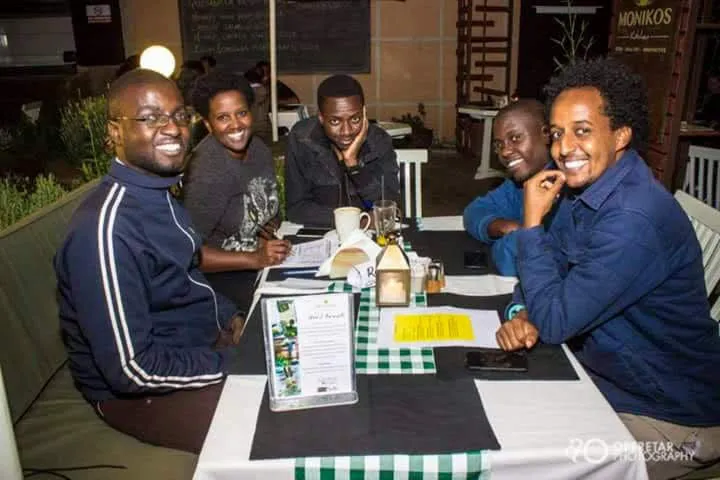
Photo: Hilary Murugu, CC BY-SA 4.0, via Wikimedia Commons
It is 8.07pm on a Tuesday in a pub that shall remain nameless, mostly because the landlord has enough on his plate. The football is murmuring on the screen in the front bar. Nobody is watching. In the back room, fourteen teams are hunched over laminated answer sheets like contestants in a heist film. The quizmaster, a man called Graham who has the aura of a retired referee and the microphone technique of a local radio host, clears his throat. 'Question one,' he says. 'And I want to remind everyone that the picture round is not a competition to see who can argue loudest. Although, historically, it is.'
This is the 2026 pub quiz: less a gentle bit of midweek trivia, more a theatrical contact sport with crisps. Across Britain, back rooms that once hosted darts and the occasional wedding disco are now staging weekly arms races of obscure knowledge, absurd specialist rounds and team-name one-upmanship. The prize is often a bar tab or a plastic trophy. The stakes feel considerably higher.
The team-name industrial complex
The first battleground is the team name. In 2026, a name like 'The Quizzy Rascals' is a forfeit. The modern pub quiz demands something with a plot. Recent entries spotted in the wild include 'Jeremy Clarkson's Hedgerow Trauma', 'My Nan's Wifi Password Is On The Fridge' and 'We've Peaked At Question Two'. There is a whole genre of names that are just an apology in advance: 'We Are Only Here For The Chips'. And there is a darker genre of names that reference the quizmaster's personal life, which Graham has learned to ignore with the dignity of a man who once had a birthday cake shaped like a question mark.
Team names are now part of the theatre. They are read aloud, and the room judges them. A good name buys goodwill. A great one buys a round of applause. A bad one — anything with 'brainiacs' in it — buys a gentle, devastating silence.
Specialist rounds have gone rogue
The second battleground is the rounds themselves. The general knowledge round is still there, like a reliable uncle. But it has been shoved aside by specialist rounds that seem designed by someone who has just discovered the internet at 2am. In 2026, quizzes have asked teams to identify a crisp flavour from the sound of the packet being opened. To name the roundabout from a blurry dashcam still. To match a 1990s advert jingle to the product. To decide whether a photo shows a celebrity or an unusually famous local councillor. One quiz in the North West reportedly ran a round called 'Bin Or Not Bin', where teams had to guess whether an object had been fly-tipped or was an art installation. The winner got it wrong on purpose and was awarded a packet of Quavers.
The point is not really the knowledge. The point is the shared descent into nonsense. You do not need to know the answer to have a strong opinion about it. That, as any sports fan will tell you, is the entire appeal.
The quizmaster is the new local celebrity
Graham is not famous. Graham is, however, recognised in the Co-op. That is the 2026 quizmaster's lot: local deity, part-time peacekeeper, full-time keeper of the answer sheet. The best quizmasters have a persona. Some are deadpan. Some are theatrical. Some have a catchphrase — 'Let's get quizzical' — that they deploy with the weariness of a man who has said it 400 times and will say it 400 more. They are heckled, adored, accused of bias and asked to adjudicate disputes about whether 'The Beatles' counts if you wrote 'The Beetles'. They are, in short, the referees of the back room.
And like referees, they are blamed for everything. The picture round is a particular flashpoint. A grainy photo of a minor television presenter from 2004 can cause a schism. Someone will claim it is 'obviously' someone else. Someone will produce a phone. Someone will be told to put the phone away. The quizmaster will stare into the middle distance and wonder if it is too late to retrain as a lorry driver.
The etiquette wars: phones, tie-breakers and the picture round
Phone cheating is the great unspoken crisis of the 2026 pub quiz. Everyone says they do not do it. Everyone has seen someone do it. The tell is the sudden, suspiciously synchronised trip to the loo, or the friend who 'just remembered' the answer to a question about a 1970s sitcom. Pubs have responded with phone amnesties, signal blockers (allegedly), and the stern announcement that 'anyone caught Googling will be disqualified and also judged'. The etiquette is simple: you may use your phone to take a photo of the answer sheet, order a drink or text your partner that you will be late. You may not use it to look up the capital of Burkina Faso.
Then there are tie-breakers. The tie-breaker is where the pub quiz becomes pure sport: a single question, a written answer, and a room holding its breath. Favourite tie-breakers include 'How many baked beans in a standard tin?' and 'What is the combined age of the cast of EastEnders?' The correct answer is often disputed. The winner is often the team that guessed closest while pretending to be calm. The loser is often the team that said 'I told you we should have gone with 465'.
Why the back room is winning
So why is the pub quiz booming in 2026? Because it is one of the few nights out left that asks nothing of you except that you turn up, sit down and have a go. It is cheap. It is social. It is gently competitive without requiring special trainers. And it has become genuinely theatrical — a live show where the audience is also the cast, the quizmaster is the compere, and the picture round is the villain.
As Graham reads out the final scores, the winning team cheers, the losing team demands a recount, and someone's phone goes off with the answer to question seven still on the screen. The room notices. The room judges. The room moves on. Next Tuesday, same time, same back room. Bring a pen. Bring a friend. Bring your best terrible team name. The tie-breaker will be televised, in our hearts.