Welcome to Thistley Bottom (Population: Fictional): The Fake Villages Taking Over Your Feed
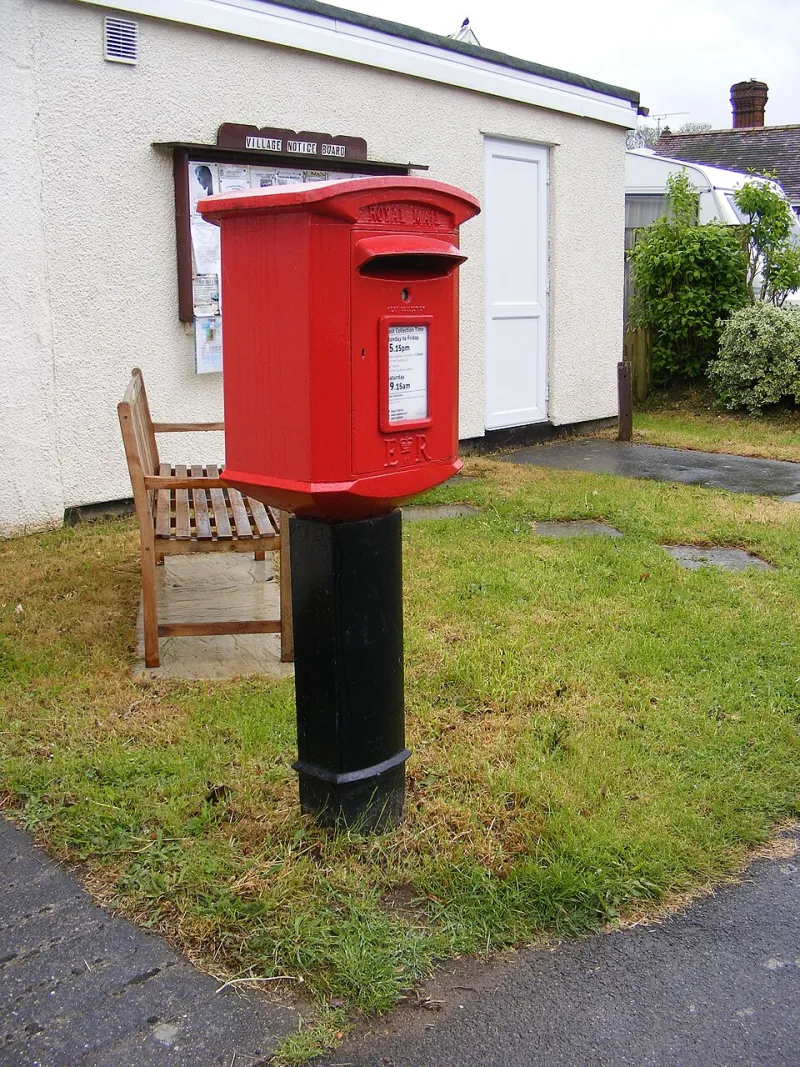
Photo: Geographer , CC BY-SA 2.0, via Wikimedia Commons
It's half eleven on a Tuesday and I am watching a video about a village called Thistley Bottom. Population 312. One postbox, leaning at an angle that would have the council out within the hour. A village hall with a noticeboard reading, in tiny type, “Tuesday: nothing. Wednesday: nothing. Thursday: jumble.” The caption says the newsletter has gone out again and there's been a “situation” with the bench.
None of it is real. All of it, apparently, is extremely shareable.
If your feed looks anything like mine, you've met a dozen of these places by now. There's one with a beach and a cathedral and no explanation. There's one where the parish council has banned something and won't say what. There's one where the pub has a name like The Dog & Ferret and a hand-painted sign that appears, on closer inspection, to have letters that don't quite join up.
Welcome to the AI village boom: Britain as imagined by a machine that has read a great many Sunday supplements.
The Formula, Basically
These accounts follow a recipe so tight you could serve it with a cup of tea.
Start with a name. Two words, an ampersand or a hyphen, ideally something faintly rude: Nether Wallop-adjacent, Chipping Whatever, Little Stodge, Upper Brambling, Marsh Cum Magna. Add a postcard image — thatched roof, war memorial, one (1) wheelie bin left out four days late. Then bolt on the lore.
The lore is where the views live. The village fête that was “a bit of a do” until somebody's marquee went over the hedge. The passive-aggressive notice: “Would the owner of the grey car please note that the space outside number 4 is NOT a designated drop-off.” The missing cat, the disputed boundary, the fundraising calendar where somebody has clearly been photographed against their will.
It's a very specific fantasy of Britain, and it's enormously effective, because it's built almost entirely out of things we recognise and can't quite prove we've seen.
Why It Scrubs Up So Well
The appeal is partly nostalgia and partly something closer to recognition-humour. There is a real pleasure in seeing our own small dramas reflected back, exaggerated by about 20 per cent. Everyone in Britain has known a parish noticeboard that quietly destroys a reputation in nine words. Everyone has known a village where the main social event of the year is a raffle in a leaking hall.
The comments do half the work. People arrive to say “this is my nan's village exactly” or “I grew up somewhere like this and it's all true.” Then somebody else says “is this real?” and the whole thing snowballs. Nothing spreads faster than a question nobody can be bothered to answer.
The other advantage is that a fake village has no downside. No potholes, no bus cuts, no second-home owners. It's a sanitised, hand-drawn version of rural Britain where the worst thing that happens is a disagreement about a bench — and everything can be resolved with a scone.
How to Spot One in About Four Seconds
Not that there's anything wrong with enjoying it. But it's worth knowing what you're looking at, because the fakes are getting better and the genre is getting copied by people who are extremely unserious about the whole thing.
Look at the text first. AI-generated lettering goes soft and melty, especially at small sizes — the type on a fête poster will start reasonably and end up as decorative squiggles. Village names get mangled. Handwriting on a noticeboard looks like handwriting the way a stock photo looks like a wedding.
Then look at the geography. Does the village have a harbour, a moor and a Norman church within walking distance? Is there a postcode that doesn't match the region? Is the pub's sign painted with an animal that is nearly, but not quite, a dog?
Then check the details that no real village account would get wrong: opening hours that don't add up, a date that falls on the wrong day of the week, a church clock with the wrong number of numbers, a road sign that says something like “Bramling 2 — ” and stops.
And finally, check the account. Fake villages rarely post about actual weather, local news, or a real, searchable road. They post vibes. Beautiful, immaculate, smudge-free vibes.
The People Who Actually Live in One
Here's the bit the accounts don't cover. Real parish councillors, real clerks and real village hall committees have spent the past year watching their lives turned into a whimsical aesthetic.
A parish clerk I spoke to in Wiltshire had a fairly measured take on it. “I can see why it's funny,” she said. “But our newsletter is one side of A4 about bin collections and a fallen tree. If somebody made a version of it with jokes in, I think half the village would ask why we'd suddenly got a sense of humour.”
Others are less relaxed, particularly where fake villages have been given names close to real ones, or where invented notices about travellers, parking or “outsiders” start doing the rounds attributed to a genuine council. That's when a joke becomes a problem: the format is designed to look official, and it takes about nine seconds for a screenshot to end up in a WhatsApp group with an angry message underneath.
The Slightly Unsettling Bit
What makes these videos work is also what makes them a little eerie. They're a fantasy of a country that never quite existed — or existed briefly, in a Sunday evening drama, on a budget. The villages are warm, funny, gently bickering and essentially safe. Nobody there is skint. Nobody there is lonely for long. The worst thing that can happen is a wobbly postbox.
Which is, honestly, a fairly nice place to spend twenty seconds at half eleven at night. Just don't book a weekend away.
As for Thistley Bottom, I've followed the account. The bench situation hasn't been resolved. The Christmas lights are up in the wrong tree. The calendar is £4 and, if the comments are anything to go by, genuinely selling.